The Radar
Searching is the hard part. This does it.
A speaker can build their own bio library in a weekend. Nobody can keep up with a few hundred association calendars, which is the actual reason gigs get missed.
Why finding events is worse than it sounds
There is no single place where speaking opportunities are posted. They live on individual association websites, in chapter newsletters, on conference pages that change every year, and in calls for speakers that open in January and close in February with no announcement anywhere you would see it.
Searching for them is not one job, it is the same job repeated across every organisation you might speak to, forever. That is why most speakers do it in bursts, usually right after a slow quarter, and miss most of a year in between.
One list, researched once, shared by everybody
4Spot does the sourcing and keeps it current. It runs once on our infrastructure and serves every member, which is why you get the work of a research process for the price of a software subscription rather than the price of a researcher.
An opportunity does not arrive as a link. It arrives as a record with everything you would have had to dig out yourself:
- The event, the organizer, and the website
- Dates, and how firm those dates are
- Where it is, or whether it is virtual
- Roughly how many people attend
- The audience and the theme
- When the call for speakers opens and closes
- The submission link
- The date we last checked all of it
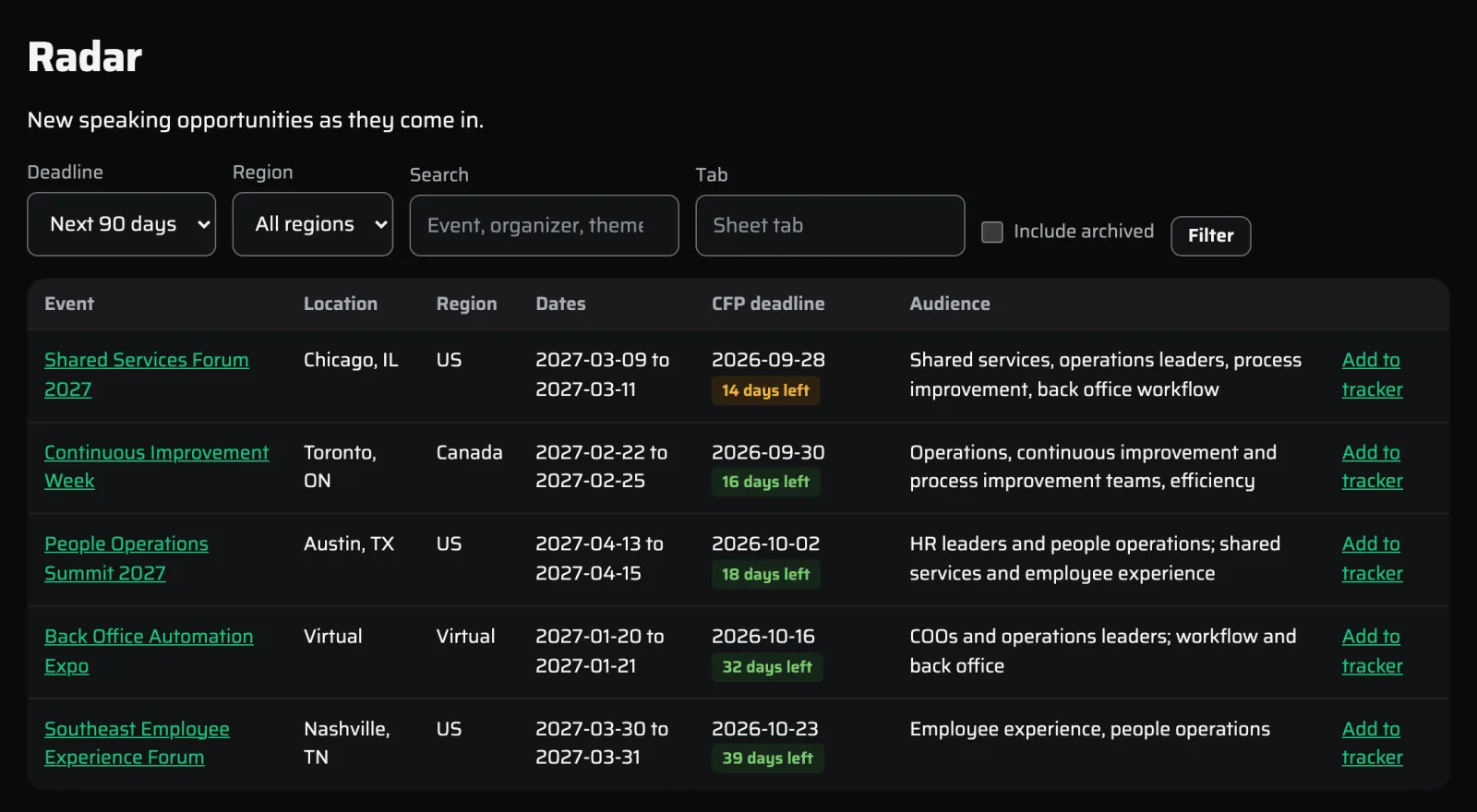
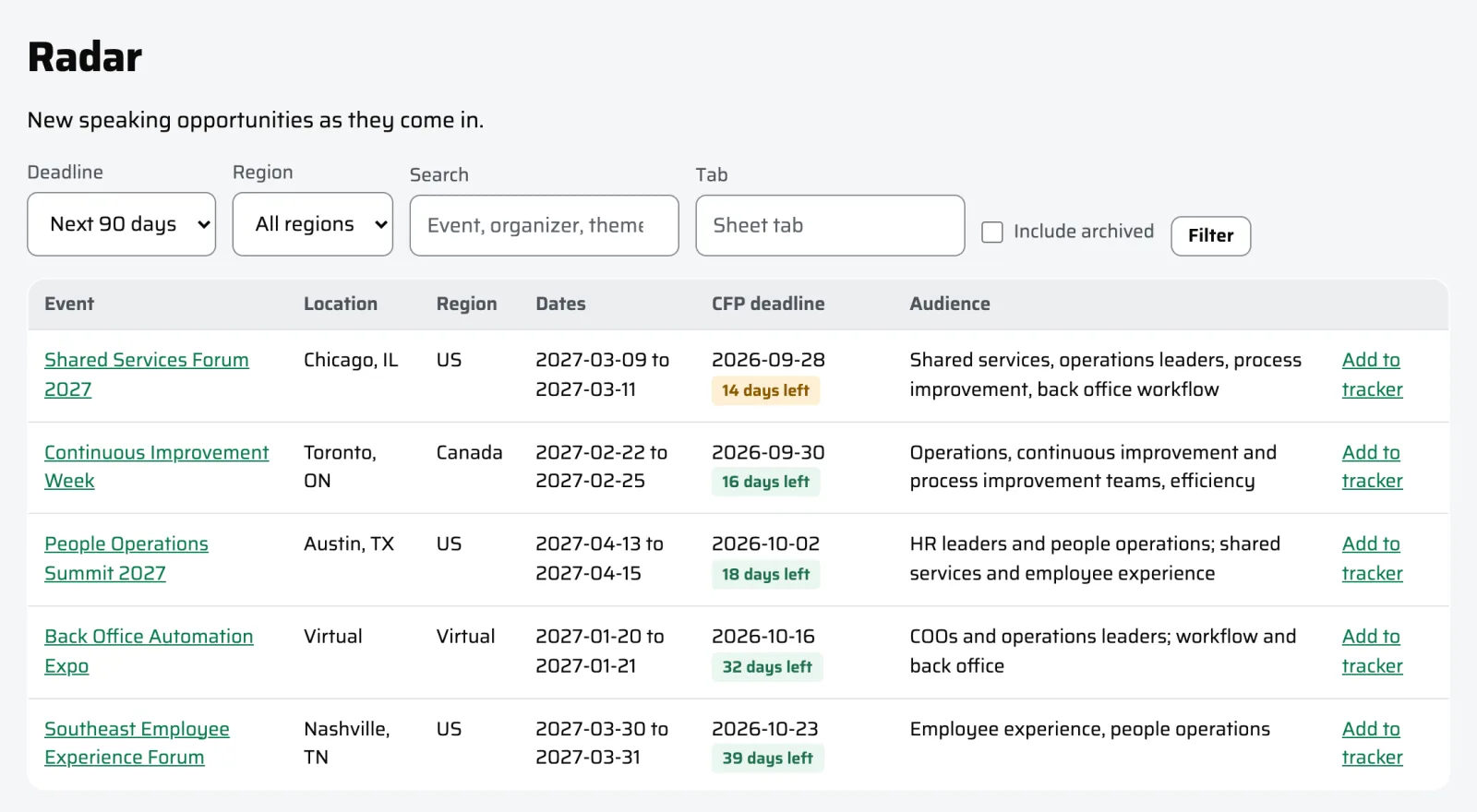
The dates get re-checked, not just collected
A call for speakers that closed last March is worse than no listing at all, because you act on it. Every source is re-checked on a schedule by an automated health check that watches for a page that changed or stopped responding, and only the exceptions reach a person. Each record carries the date it was last verified, so you can see for yourself how fresh it is.
The right ones come to you
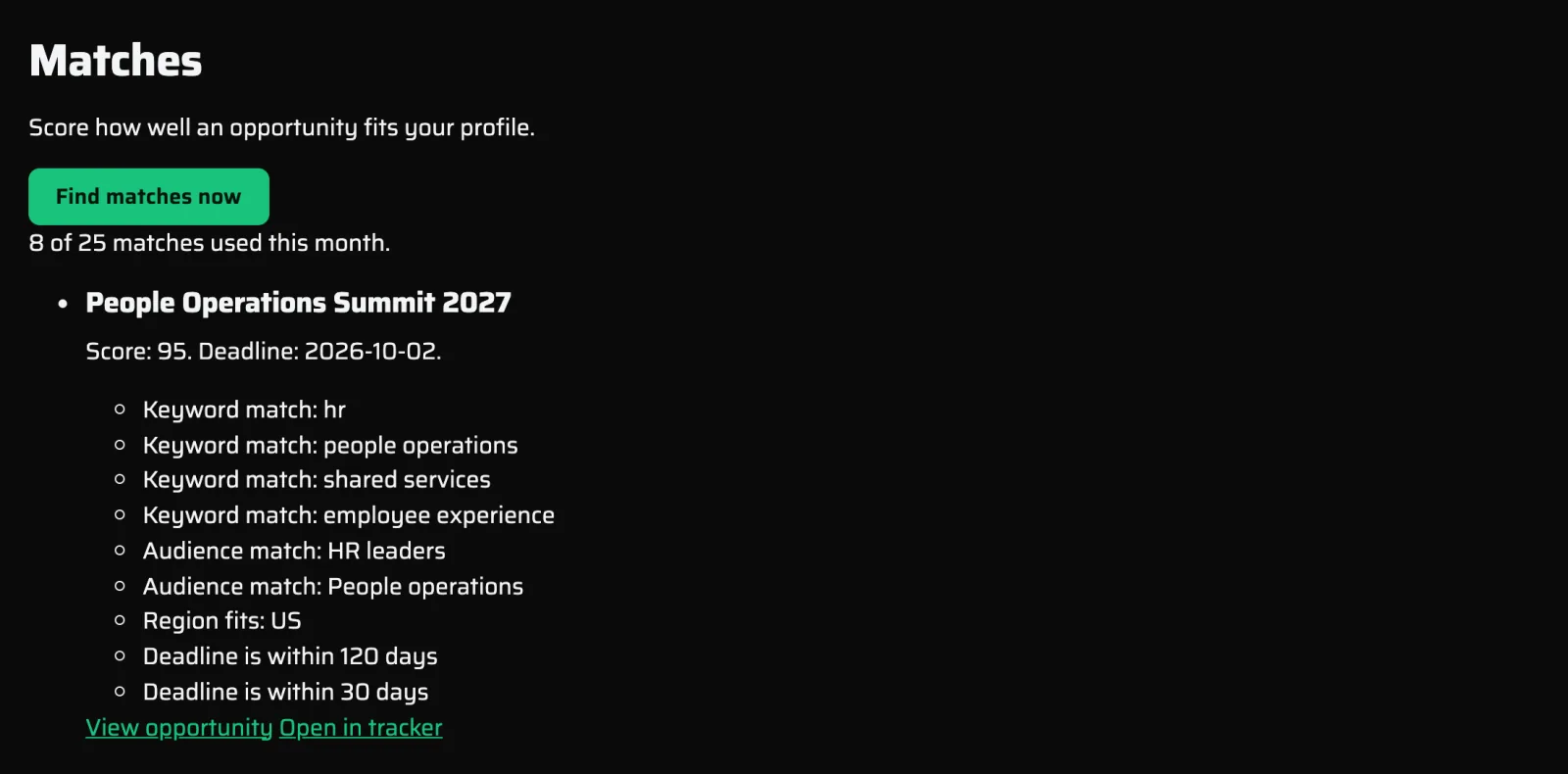
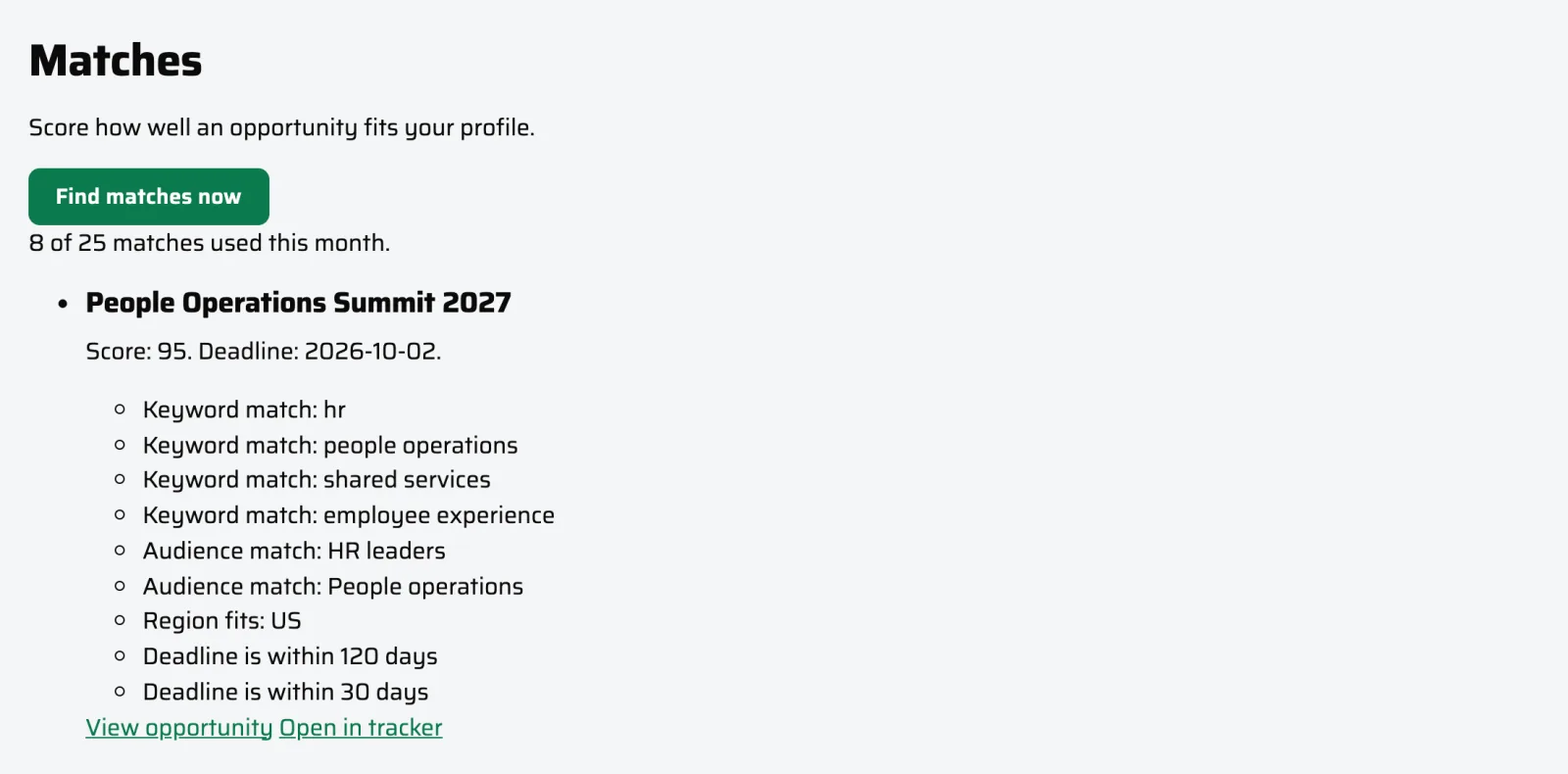
You do not read the whole list. A lane is a topic and an audience you speak to, and the Matcher scores every new opportunity against yours, then drops the best ones into your Tracker as suggestions. Browsing the full Radar is there when you want it, and it is not metered on any plan.
Run more than one audience and you run more than one lane. Jeff runs an HR lane and a Law lane from the same account, and each one pulls its own matches.
Start with Concierge, free for seven days
Seven days of Concierge, free, gets you matches scored against your own lanes - enough to see whether the events coming back are the stages you would actually want.